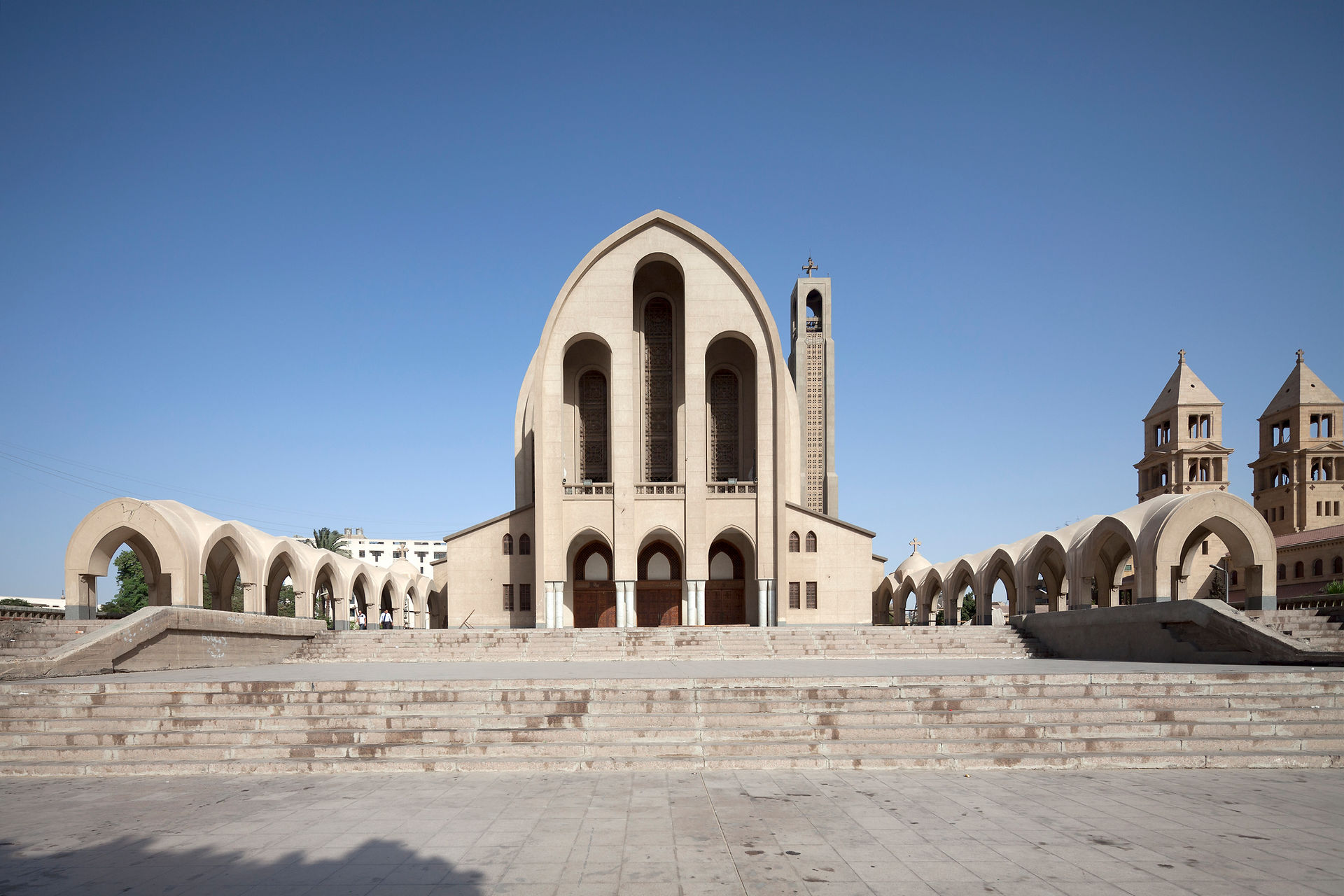

NAIROUZ FROM BLOOD TO GLORY

The Coptic New Year and the Witness of the Martyrs
Points Covered
Introduction
Historical Background of the Calendar
The Great Persecution and Pope Peter I
The Coptic Calendar (Anno Martyrum)
Nairouz in Liturgy and Tradition
Martyrs of the Diocletian Era
Continuation of Martyrdom Beyond Diocletian
Theological and Spiritual Significance
Contemporary Relevance
The 21 Martyrs of Libya (2015)
Conclusion
1. Introduction
Nairouz, the Coptic New Year, is more than a celebration of time passing; it is a profound commemoration of faith, endurance, and victory. Rooted in ancient Egypt, the word Nairouz (Nayrouz) derives from the Coptic term for "the rivers," a direct reference to the life-giving Nile flood that once marked the new year.
The Coptic Church sanctified this ancient festival, transforming it into the Feast of the Martyrs to mark the start of the liturgical year, known as the "Year of the Martyrs" (Anno Martyrum).
At its heart, Nairouz remembers those who “loved not their lives to the death” (Revelation 12:11), who endured the Diocletianic persecution and sealed their faith with blood. Therefore, each new year begins not with fireworks or festivities alone, but with a solemn reminder that the Church is built upon their sacrifice —where the "rivers" of the martyrs' blood brought spiritual renewal to the faith.
2. Historical Background of the Calendar
The Coptic calendar is not an invention of the Christian era but an inheritance from ancient Egypt. The Egyptians had perfected a solar calendar of twelve months of thirty days each, plus five epagomenal days at the year’s end. This system was stable and accurate, and the Church preserved it.
What changed was the epoch. In the year AD 284, Diocletian rose to power. His reign became infamous for launching the most brutal persecution against Christians. To honor the martyrs who suffered, the Coptic Church re-anchored the ancient calendar: the first year of Diocletian’s reign became Year 1 of the Era of the Martyrs (Anno Martyrum, AM).
3. The Great Persecution and Pope Peter I
In AD 303, Diocletian issued his edicts: churches were to be destroyed, Scriptures burned, and Christians forced to sacrifice to idols. Egypt, a centre of Christian faith, endured unparalleled cruelty. Local governors, especially Arianus of Antinoë, executed thousands across Upper and Lower Egypt.
During these dark years, the Church was shepherded by Pope Peter I of Alexandria (300–311), known as the Seal of the Martyrs. He defended the faith, set canons for repentance, and strengthened the faithful. Eventually, he too was arrested and martyred on 29 Hathor 311 AD.
By his time, the Church had already begun to count years from AD 284, anchoring history to the blood of the martyrs. Thus, Pope Peter I’s own martyrdom became the seal confirming the identity of the Coptic Year.
4. The Coptic Calendar (Anno Martyrum)
Why was AD 284 chosen?
It marks Diocletian’s accession to the throne.
His reign came to symbolise the Era of the Martyrs, even though the persecution began later, in 303.
This means the Coptic Year was established retrospectively:
AD 284 = AM 1.
AD 285 = AM 2, and so on.
In this way, time itself was sanctified, not by emperors or kings, but by the blood of those who gave their lives for Christ. As St Paul reminds us:
“You are not your own, for you were bought at a price; therefore glorify God in your body and in your spirit, which are God’s” (1 Corinthians 6:19–20).
Today, the Coptic calendar continues to be used to determine feasts, fasts, and liturgical seasons, preserving the living memory of the martyrs.
5. Nairouz in Liturgy and Tradition
The Feast of Nairouz is celebrated on Tout 1 (corresponding to September 11 (or 12 in the Gregorian year that precedes a Gregorian leap year). The Church begins every year with the remembrance of the martyrs.
The liturgical readings echo themes of endurance and reward:
Gospel: “You will be hated by all for My name’s sake. But he who endures to the end will be saved.” (Matthew 10:22)
Pauline Epistle: “If we endure, we shall also reign with Him.” (2 Timothy 2:12)
Psalm & Gospel responses proclaim joy, even in suffering.
The faithful greet one another with blessings of a new year, often offering dates and guava fruits — dates symbolizing the sweetness of faith, and guava with its white interior symbolising purity.
Thus, the Church begins the year not with worldly celebration, but with holy remembrance.
6. Martyrs of the Diocletian Era
The persecution under Diocletian filled Egypt with martyrs from every city and background. Their witness is spread across the Coptic Synaxarion and is remembered throughout the year.
Places of Martyrdom: Alexandria, Esna, Akhmim, Bahnasa, Fayoum, Damanhur, the Delta towns, and beyond.
Diversity of Witnesses:
Bishops (e.g., St Psote of Antinoë, St Ammonius of Esna).
Soldiers (e.g., St Mina, St Abaskhiroun, St George).
Virgins (St Demiana and her forty virgins, Sts Barbara and Juliana).
Children (St Abanoub).
Mothers (Mother Dolagy with her four sons).
Examples:
Pope Peter I of Alexandria – Seal of the Martyrs.
St Mina the Wonder-Worker – soldier and martyr near Alexandria.
St Demiana – abbess of consecrated virgins.
St George the Cappadocian – martyr at Lydda.
Martyrs of Akhmim and Esna – thousands in Upper Egypt.
Together, they form a living cloud of witnesses, fulfilling the Scripture: “Therefore we also, since we are surrounded by so great a cloud of witnesses, let us lay aside every weight, and the sin which so easily ensnares us, and let us run with endurance the race that is set before us” (Hebrews 12:1).
7. Continuation of Martyrdom Beyond Diocletian
The martyrdom of the Copts did not end with the fall of Diocletian or the end of pagan persecutions. Under the Byzantine Empire, especially after the Council of Chalcedon (AD 451), the Coptic Church suffered for remaining faithful to the true Orthodox faith of the One Nature of Christ (Miaphysitism), as confessed by St Cyril of Alexandria.
Thousands of clergy, monks, and laypeople shed their blood not for refusing idols, but for defending the Orthodox doctrine against imperial pressure. This persecution by fellow Christians proved that martyrdom in the Coptic Church was not an isolated episode but the entire journey of her history.
The Coptic Synaxarion preserves the memory of many such martyrs, confessors, and patriarchs who were tortured or killed for their refusal to abandon the faith of their fathers. Their blood joined that of the earlier martyrs, showing that the Church of Egypt is, in every century, the Church of the Martyrs.
As the Lord said: “In the world you will have tribulation; but be of good cheer, I have overcome the world.” (John 16:33)
8. Theological and Spiritual Significance
Nairouz embodies a profound theology of time: the Coptic Church measures history not from the birth of emperors, but from the witness of martyrs. It is a proclamation that time itself belongs to Christ and is marked by His faithful witnesses.
At the threshold of each year, the Church calls her children to:
REMEMBER – the faith and sacrifice of the martyrs: “Remember those who rule over you, who have spoken the word of God to you, whose faith follow” (Hebrews 13:7).
RECOMMIT – to the same steadfastness and holiness: “Be faithful until death, and I will give you the crown of life.” (Revelation 2:10).
REJOICE – in Christ’s victory and the Church’s triumph: “Rejoice in the Lord always. Again I will say, rejoice!” (Philippians 4:4).
Through this rhythm, the Church transforms the memory of suffering into a living fountain of hope.
9. Contemporary Relevance
Nairouz is not a commemoration of the past but a living proclamation. The Coptic calendar, beginning with the Era of the Martyrs, teaches that time itself is sanctified by witness to Christ.
Nairouz is an identity marker for the Copts, reminding them who they are as a Church of martyrs.
Martyrdom is a continuous reality — not only in the past but in modern times.
Each new year is a call to resilience, faith, and renewal, echoing the endurance of the martyrs.
10. The 21 Martyrs of Libya (2015)
On February 15, 2015, twenty-one Coptic Christians were martyred by ISIS in Libya for refusing to deny Christ. Among them was Matthew Ayariga, a Ghanaian Christian who chose to die with them, declaring their God to be his God.
Their blood mingled with that of their forefathers, proving that the Era of the Martyrs is not finished but continues. Their feast day, 8 Amshir, has been officially added to the Coptic Synaxarion.
They stand as a bridge between the martyrs of Diocletian and today, showing that the Nairouz spirit is alive in every generation. “Jesus Christ is the same yesterday, today, and forever.” (Hebrews 13:8)
11. Conclusion
Nairouz is both a new beginning and a perpetual memorial. It unites the past with the present, proclaiming that the blood of the martyrs is the seed of the Church.
The Coptic calendar is a living witness to the Church’s faithfulness. From Pope Peter I and the martyrs of the Diocletian era to the 21 Martyrs of Libya, the Coptic Church continues to begin her year with the blood of witnesses, proclaiming: “If we endure, we shall also reign with Him.” (2 Timothy 2:12)
Through Nairouz, the Church calls us each year to:
Remember the martyrs.
Recommit to Christ.
Rejoice in the victory of faith.
From blood to glory, the Coptic New Year proclaims the eternal triumph of Christ and His saints.


