
Saint Mark the Apostle: Founder of the Coptic Church
Updated: Jul 31

To understand the Coptic Orthodox Church of Egypt—one of the oldest continuous Christian communities in the world—one must understand Saint Mark the Apostle.
Historically recognized as the author of the second Gospel and ecclesiastically honored as the First Pope of Alexandria, Saint Mark serves as the historic bridge between the Apostolic age and the continent of Africa.
I. Identity, Family, and the First Christian Church
Saint Mark—whose Jewish name was John and whose Roman name was Mark—was born in Cyrene, in modern-day Libya, during the early first century.
His parents, Aristobulus and Mary, were wealthy and highly respected Jewish agriculturalists. Seeking safety from Berber raids, the family emigrated to Palestine and settled in Jerusalem during the public ministry of Jesus Christ.
Mark’s family was well connected within the early Christian circle.
His mother, Mary, was a devoted follower of Jesus, and his uncle by marriage was the Apostle Peter.
Mary’s home housed the famous Upper Room—the site of the Last Supper, the hiding place of the disciples after the Crucifixion, and the place where the Holy Spirit descended on Pentecost. Thus, Coptic tradition recognizes Saint Mark’s home as the first Christian church building in history.
Mark was highly educated, mastering Hebrew, Greek, and Latin. This later allowed him to preach across the diverse cultures of the Roman Empire.
II. The Miracle of the Lions
Before embarking on his global missions, a defining miracle occurred during Mark’s youth that led to his father’s conversion.
While walking with his father, Aristobulus, near the Jordan River, they were confronted by a ravenous lion and lioness. Fearing for his son’s life, Aristobulus begged Mark to flee and save himself.
Mark replied:
“Christ, in whose hands our lives are committed, will not let them prey on us.”
Mark prayed, asking Christ to neutralize the beasts. Instantly, both lions fell dead.
Stunned by this divine intervention, Aristobulus asked his son to teach him about Jesus Christ. He believed, and Mark baptized his own father.
III. Apostolic Journeys and the Route to Egypt
As one of the Seventy Apostles appointed by Christ, as recorded in Luke 10:1–12, Mark was an active missionary.
He travelled extensively throughout the Mediterranean, working alongside Saint Paul and Saint Barnabas across Antioch, Cyprus, Rome, and parts of modern-day Lebanon.
Following these missions, the Holy Spirit directed him back to Africa. He travelled through his birthplace in Cyrene and began a historic journey toward one of the great metropolises of the ancient world: Alexandria, Egypt.
How Saint Mark Reached Alexandria: The Final Miles
The Coastal Path
Saint Mark followed the ancient Mediterranean littoral, a humanly possible and direct route, walking east from Cyrene in modern Libya. The coastal plain was bounded by low cliffs and desert dunes to his right and the safe blue of the sea to his left.
Arrival at the Outskirts
This moment captures his final approach as the city of Alexandria first appears. The worn, dusty Roman road leads him toward the metropolis on the horizon.
His weary posture, simple tunic, and walking staff show the effects of his long and dedicated journey.
The Tattered Sandal
The broken strap of his tattered sandal is a critical detail. It was this broken strap that led him to find the cobbler Anianus, sparking the first Coptic conversions.
The damaged sandal serves as a reminder of his exhausted arrival.
A City of Distant Light
On the far left, on Pharos Island, the faint silhouette of the Lighthouse of Alexandria is visible.
This colossal landmark confirms his destination and provides a dramatic contrast with his solitary journey.
IV. The Foundation of Coptic Christianity: Anianus the Cobbler
Upon entering Alexandria in AD 61, exhausted and with a torn sandal, Saint Mark stopped at a local shoe-repair shop run by a cobbler named Anianus.
While repairing the strap, the cobbler’s awl slipped and deeply pierced his hand. Anianus cried out in Greek:
“He is ho Theos!” “God is One!”
Hearing this monotheistic cry in a heavily pagan city, Mark’s heart rejoiced.
He mixed his spit with clay, applied it to the wound, and healed Anianus’s hand instantly in the name of Jesus Christ.
Astounded, Anianus invited Mark to his home, where his entire family was baptized.
As the Christian community grew, pagan hostility increased. To safeguard the young Church, Mark ordained Anianus as Bishop, alongside three priests—Mylios, Sabinos, and Sardinos—and seven deacons, before temporarily departing for other missions.
V. Chronology and the Gospel of Mark
A major point of pride in Coptic history is the ancient date of the Church’s foundation.
The fourth-century church historian Eusebius of Caesarea links the foundation of the Alexandrian Church to the reign of Emperor Claudius, before AD 54.
Correlating these accounts with the writings of the Jewish philosopher Philo has led some to suggest that the initial spark of Alexandrian Christianity may date back as early as the AD 40s, making it one of the earliest established churches outside Judea.
During his travels, Mark also penned his Gospel.
Written in popular and direct Koine Greek, the Gospel of Mark is widely recognized by modern scholars as the earliest of the four canonical Gospels. It was drafted to capture vivid eyewitness accounts of Christ’s life.
VI. Martyrdom at Bokalia — AD 68
By AD 68, Saint Mark had returned to Alexandria and found a thriving Christian community that had built a church at Bokalia—meaning “the place of cows”—along the seashore.
On 25 April AD 68, the Christian celebration of Easter coincided with the pagan festival of the god Serapis.
Enraged by the decline of their temples, a pagan mob stormed the Bokalia church, seized Saint Mark, tied a rope around his neck, and dragged him through the rocky streets of Alexandria.
He was thrown into a dark prison cell that night.
Ancient records state that the angel of the Lord, followed by Christ Himself, appeared to comfort him.
The next morning, 26 April—30 Baramoudah—the mob dragged him again until he delivered his soul into the hands of God.
When the pagans built a massive bonfire to cremate his remains, a sudden and violent storm brought torrential rain and dispersed the crowd.
The faithful safely gathered his body and buried him beneath the altar of the Bokalia church.
VII. The Odyssey of Saint Mark’s Relics
The physical remains of Saint Mark have a highly dramatic, centuries-long history of travel, theft, protection, and repatriation.
644 AD — The Theft of the Head
During the Arab conquest, a sailor stole Saint Mark’s head from the church.
Tradition states that the sailor’s ship became miraculously stuck and could not sail until the head was returned.
The military leader ‘Amr ibn al-‘As returned the head to Coptic Patriarch Benjamin I and donated 10,000 dinars to build a worthy cathedral to house it.
828 AD — The Venetian Heist
Venetian merchants smuggled Saint Mark’s body—excluding the head—out of Alexandria and transported it to Venice, Italy.
The city adopted Mark as its patron saint, became known as the Republic of Saint Mark, and built the magnificent Saint Mark’s Basilica.
Eleventh–Eighteenth Centuries — Safeguarding the Relics
To protect the sacred head from being seized for ransom by local rulers, it was continuously moved between trusted Coptic families.
In the eighteenth century, Patriarch Peter VI placed the head in a chest mixed with the relics of other saints so that potential thieves could not distinguish it.
1968 AD — The Historic Return
In a historic moment of Christian unity, Pope Paul VI of the Roman Catholic Church returned a portion of Saint Mark’s relics to Coptic Pope Cyril VI.
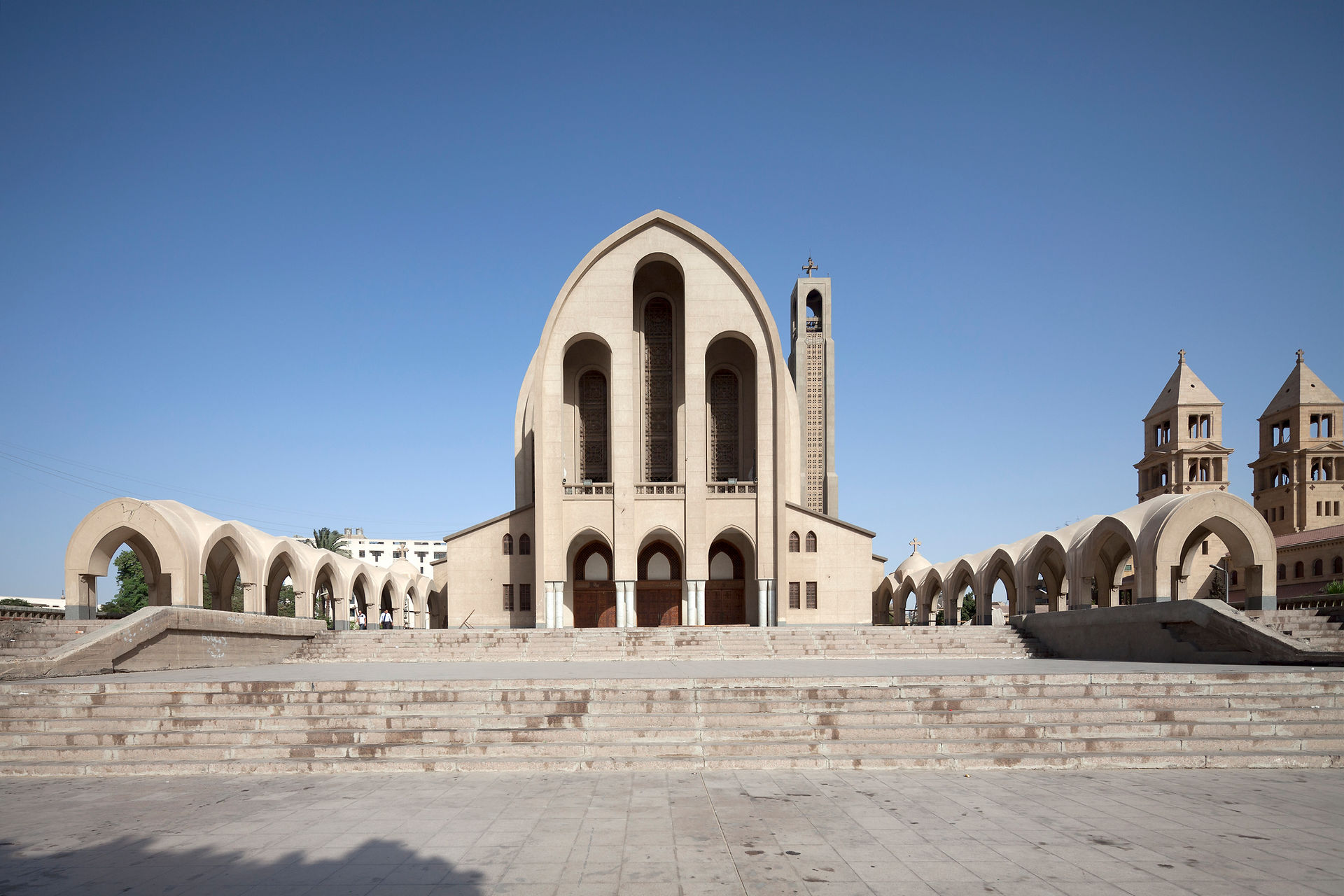
The relics were enshrined in a grand granite crypt beneath the newly built Saint Mark’s Coptic Orthodox Cathedral in Cairo, Egypt, where they remain today.
VIII. Enduring Legacy
Saint Mark left two monumental structural legacies that shaped the Christian world.
The Divine Liturgy of Saint Mark
This is regarded as the earliest liturgical structure of the Egyptian Church.
It was later edited by Saint Cyril in the fifth century and is known today as the Cyrillian Liturgy.
The Catechetical School of Alexandria
Building upon the educational system that Saint Mark established for new converts, this school grew to become the premier theological institution of antiquity.
To this day, the Coptic Pope is enthroned as:
“The Pope of Alexandria and Patriarch of the See of Saint Mark.”
He carries forward a spiritual lineage that began with a torn sandal, a healed cobbler, and an unshakeable faith in the first century.
Bibliography and Academic Sources
Anba Shenouda III. Murqus al-Rasul (Mark the Apostle), 2nd ed. Cairo, 1975.
Atiya, Aziz S. History of Eastern Christianity. London, 1968.
Eusebius of Caesarea. Historia Ecclesiastica — Ecclesiastical History. Fourth century.
Philo of Alexandria. De Vita Contemplativa — On the Contemplative Life. First century.


