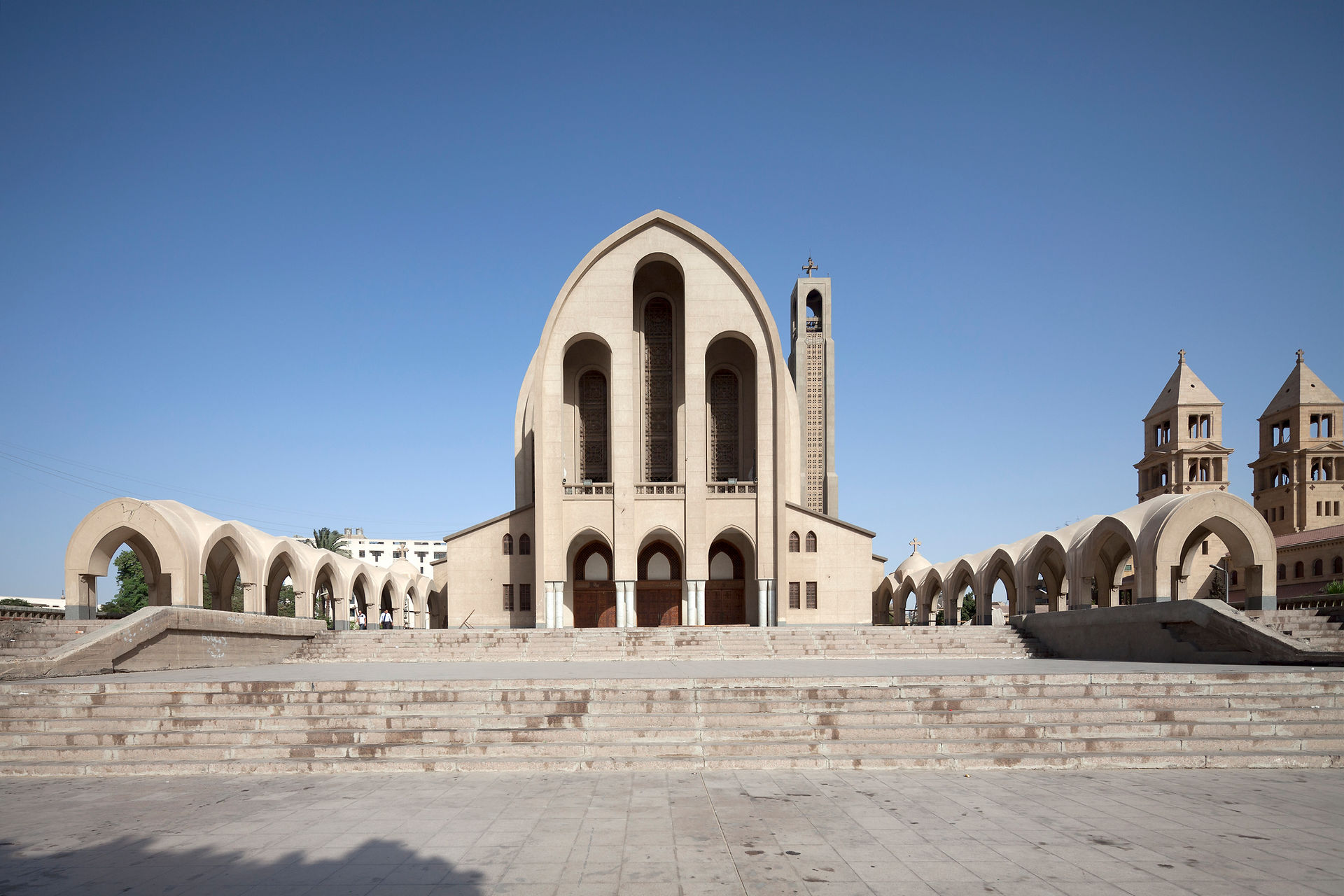

What Is the Orthodox Church?
Updated: Aug 6

Answer
“Behold, I am coming quickly! Hold fast what you have, that no one may take your crown.” Revelation 3:11
This commandment resounds loudly in the ears of our Coptic Orthodox Church. We are deeply concerned for the crown prepared for each one of us in eternity. Therefore, our glorious Church preserves what she has—faith, prayer, praise, and profound spiritual struggle—so that we may receive the unconquerable crowns of grace on the Last Day.
Some may ask: Does not every church also hold fast to what it has, fearing this divine warning? What, then, distinguishes our Coptic Church from others? Is not everyone accepted before God? Why do we hold so firmly and proudly to our Church?
What Distinguishes Orthodoxy?
Orthodoxy is distinguished in its thought from all other denominations because it is the Church of Apostolic Tradition. It is a traditional, priestly, liturgical, patristic, and biblical Church, and it is the assembly of saints in heaven and on earth.
Let us now discuss these distinctive characteristics one by one.
1. Apostolic Tradition
What Is Tradition?
Tradition is the way in which the Fathers understood the meaning of the Gospel and the details of the faith. They handed it down to us just as they had received it from their fathers and from the Lord Jesus Christ Himself.
It is a tradition that is “not according to man” (Galatians 1:11). It is not a human invention or merely what thinkers and theologians considered preferable.
“For I delivered to you first of all that which I also received” (1 Corinthians 15:3), and, “For I received from the Lord that which I also delivered to you” (1 Corinthians 11:23).
The Gospel commands us to preserve these traditions and faithfully hand them down to succeeding generations.
“Now I praise you, brethren, that you remember me in all things and keep the traditions just as I delivered them to you” (1 Corinthians 11:2).
“Therefore, brethren, stand fast and hold the traditions which you were taught, whether by word or our epistle” (2 Thessalonians 2:15).
The Scriptures themselves therefore testify that they must be understood through Apostolic Tradition:
“But we command you, brethren, in the name of our Lord Jesus Christ, that you withdraw from every brother who walks disorderly and not according to the tradition which he received from us.” 2 Thessalonians 3:6
Part of this apostolic teaching was written in the Epistles, while another part was oral:
“But I hope to come to you and speak face to face, that our joy may be full.” 2 John 12
See also 3 John 13–14.
Another part consisted of practical arrangements:
“And the rest I will set in order when I come.” 1 Corinthians 11:34
The Holy Bible instructed the Church to preserve this tradition and to pass it on faithfully and competently to successive generations.
“And the things that you have heard from me among many witnesses, commit these to faithful men who will be able to teach others also” (2 Timothy 2:2).
“For this reason I left you in Crete, that you should set in order the things that are lacking, and appoint elders in every city” (Titus 1:5).
“Hold fast the pattern of sound words which you have heard from me” (2 Timothy 1:13).
The Fathers understood the Gospel correctly, according to the intention of the Lord Jesus Christ. Their faith was pure, and they also lived according to the Gospel as Christ intended; therefore, their lives were godly.
“The things which you learned and received and heard and saw in me, these do.” Philippians 4:9
Without this tradition, schools of interpretation would multiply to such a degree that dangerous heresies and innovations would arise through personal interpretation and through psychological and personal factors influencing the meaning of the verses.
You may ask: How did the Fathers understand the meaning and implication of verses such as the following?
“My Father is greater than I” (John 14:28).
“Whoever desires to save his life will lose it” (Matthew 16:25).
“Jacob I have loved, but Esau I have hated” (Romans 9:13).
“And if your eye causes you to sin, pluck it out and cast it from you” (Matthew 18:9).
There are many other verses which, if understood literally, would lose the meaning intended by the Lord Jesus Christ. Other passages are difficult to understand and require sound explanation and interpretation. Still others were misunderstood by some people, leading to the appearance of dangerous heresies and innovations.
Returning to Apostolic Tradition is the surest way to preserve a sound understanding of the biblical texts.
How dangerous it is for a person to depend on himself and on his own thinking:
“And lean not on your own understanding.” Proverbs 3:5
“Do not be wise in your own opinion.” Romans 12:16
“But you must continue in the things which you have learned and been assured of, knowing from whom you have learned them.” 2 Timothy 3:14
It has been said that the role of the bishop is to be:
A guardian of the sound interpretation of the verses according to the intention of the Lord Jesus Christ Himself.
One who holds fast “the faithful word as he has been taught, that he may be able, by sound doctrine, both to exhort and convict those who contradict” (Titus 1:9).
One who keeps the commandment “without spot, blameless” (1 Timothy 6:13–14).
One who rejects any person who “teaches otherwise and does not consent to wholesome words, even the words of our Lord Jesus Christ, and to the doctrine which accords with godliness,” for such a person “is proud, knowing nothing, but is obsessed with disputes and arguments over words” (1 Timothy 6:3–4).
Therefore, what matters is not only that we read the Gospel, but also that we receive light from the Church in understanding the Gospel and in living according to the commandment. This is what actually happens in our Coptic Church: she holds fast to the Holy Bible and also to the way in which the Fathers understood it.
Let us hold fast to “the faith which was once for all delivered to the saints” (Jude 3).
“Hold fast the pattern of sound words which you have heard from me, in faith and love which are in Christ Jesus. That good thing which was committed to you, keep by the Holy Spirit who dwells in us.” 2 Timothy 1:13–14
This confirms once again that this faith and sound interpretation may be written in the Holy Scriptures, explained orally, or handed down to the Church through lived practice—“whether by word or our epistle” (2 Thessalonians 2:15).
The Holy Bible did not contain a detailed explanation of every divine truth:
“I suppose that even the world itself could not contain the books that would be written.” John 21:25
Let us also beware of what Scripture warns us against:
“If anyone preaches any other gospel to you than what you have received, let him be accursed.” Galatians 1:9
What Guarantees That Apostolic Tradition Has Not Been Falsified?
Some may fear that, over the course of time, the Fathers of the Church might have introduced their own opinions into interpretation and tradition. This would inevitably falsify the true and authentic Apostolic Tradition, making the tradition now in our hands different in spirit and content from what was held by the apostles and the early Fathers.
I would like to reassure the sincere person who has this concern that, from the beginning, the Church has not approved any thought, interpretation, or direction except through a holy council:
“And the things that you have heard from me among many witnesses.” 2 Timothy 2:2
If the matter had been left to only one person—for example, the pope in any age—there would have been grounds for suspicion of deviation, falsification, or change, because we do not believe in the infallibility of individuals. Those who govern the teaching of the Church are not individuals, but the Holy Synod. Our Coptic Church is a conciliar Church, not a papal one.
There is an established rule in our Coptic Church: we do not accept any tradition unless it agrees with the Holy Bible, the consensus of the Church, and the general context of our sound faith, and unless its authentic patristic source is known.
The reader may also be reassured that if erroneous ideas or inauthentic practices enter the Church in a certain age—which happens rarely—the Holy Synod of the Church has the authority to purify her heritage from such inauthentic additions.
Our Coptic Church has preserved the Apostolic and patristic tradition entrusted to her with purity and faithfulness, and she has handed it down to us with precision and godliness. The Church has offered her blood and sweat out of love for her Redeemer and Bridegroom, and in order to preserve her heritage and the soundness of her faith.
Therefore, if you wish to rely upon enlightened divine explanation and faithful interpretation that is neither distorted nor driven by personal desires, come to your Coptic Orthodox Church and draw from the treasures of her knowledge, so that you may be satisfied, rejoice, and be made glad in Christ our God.
“For our exhortation did not come from error or uncleanness, nor was it in deceit. But as we have been approved by God to be entrusted with the gospel, even so we speak, not as pleasing men, but God who tests our hearts. For neither at any time did we use flattering words, as you know, nor a cloak for covetousness—God is witness.” 1 Thessalonians 2:3–5
2. The Priesthood
Another characteristic of our Coptic Church is that she is a priestly Church. We believe that the priesthood was not abolished in the New Testament; rather, it was changed from the order of Aaron to the order of Melchizedek.
“Therefore, if perfection were through the Levitical priesthood—for under it the people received the law—what further need was there that another priest should rise according to the order of Melchizedek, and not be called according to the order of Aaron?” (Hebrews 7:11).
“For the priesthood being changed, of necessity there is also a change of the law” (Hebrews 7:12).
Just as in the Old Testament there were people set apart for the work of the priesthood—the tribe of Levi and the descendants of Aaron—so also in the New Testament there are people set apart for the work of the priesthood.
“The Holy Spirit said, ‘Now separate to Me Barnabas and Saul for the work to which I have called them.’ Then, having fasted and prayed, and laid hands on them, they sent them away.” Acts 13:2–3
It is true that all the people are a kingdom of priests:
“You also, as living stones, are being built up a spiritual house, a holy priesthood, to offer up spiritual sacrifices acceptable to God through Jesus Christ.” 1 Peter 2:5
“But you are a chosen generation, a royal priesthood, a holy nation, His own special people, that you may proclaim the praises of Him who called you out of darkness into His marvelous light.” 1 Peter 2:9
Christ “has made us kings and priests to His God and Father” (Revelation 1:6).
The very same thing existed in the Old Testament:
“And you shall be to Me a kingdom of priests and a holy nation.” Exodus 19:6
This did not prevent there from being people specifically appointed to the work of the priesthood within the holy community—the descendants of Aaron from the tribe of Levi.
Likewise, in the New Testament, we are a kingdom of priests, yet there are priests specifically appointed to the priestly ministry of the Church. Otherwise, why did our teacher, the Apostle Paul, say about himself that he was called:
“To be a minister of Jesus Christ to the Gentiles, ministering the gospel of God, that the offering of the Gentiles might be acceptable, sanctified by the Holy Spirit.” Romans 15:16
How, Then, Is Christ the High Priest?
“Seeing then that we have a great High Priest who has passed through the heavens, Jesus the Son of God, let us hold fast our confession” (Hebrews 4:14).
“You are a priest forever according to the order of Melchizedek” (Hebrews 5:6).
He was “called by God as High Priest according to the order of Melchizedek” (Hebrews 5:10).
How can Christ be the High Priest while some claim that there is no priesthood in Christianity?
The Laying on of Hands
In our Church, the priesthood is received through the laying on of hands. The Holy Spirit comes upon the person called to the priesthood and fills him with grace and the gifts of ministry. The Holy Bible supports this, for it says “that through the laying on of the apostles’ hands the Holy Spirit was given” (Acts 8:18).
This does not refer to the general laying on of hands for all people to receive the Holy Spirit—which is now administered through anointing with the Holy Chrism:
“And when Paul had laid hands on them, the Holy Spirit came upon them.” Acts 19:6
Rather, it refers to the special laying on of hands for the priesthood:
“Do not neglect the gift that is in you, which was given to you by prophecy with the laying on of the hands of the eldership.” 1 Timothy 4:14
“Therefore I remind you to stir up the gift of God which is in you through the laying on of my hands.” 2 Timothy 1:6
The priesthood in our Church has come down to us from our father, Saint Mark the Apostle, who preached Christ to us and ordained the first bishop of Egypt, Saint Anianus. The apostolic ministry and priestly succession have continued in our Church to this day through our beloved Pope Shenouda III, all the venerable metropolitans and bishops of the Church, and the blessed fathers who are hegumen priests and Orthodox priests.
This is a great gift that many other denominations do not possess.
Gifts of the Priestly Ministry
The priesthood in the Church is a mighty grace that we cannot do without, because the priest is:
A teacher:
One who forgives the sins of repentant people by authority from Christ:
“If you forgive the sins of any, they are forgiven them; if you retain the sins of any, they are retained.” John 20:23
One who baptizes by commission from the Lord Jesus Christ:
“Go therefore and make disciples of all the nations, baptizing them in the name of the Father and of the Son and of the Holy Spirit.” Matthew 28:19
One who administers all the sacraments “as a steward of God” (Titus 1:7):
“Let a man so consider us, as servants of Christ and stewards of the mysteries of God.” 1 Corinthians 4:1
An ambassador for Christ. He is regarded as the angel of the church, its shepherd, a father to the people, a guide, a steward, and a servant of God’s altar. He blesses the people, visits them, shepherds them, shows compassion toward them, and warns them against ravenous wolves.
When necessary, he rebukes and exhorts as a father who fears that his children may go astray:
“Convince, rebuke, exhort, with all longsuffering and teaching.” 2 Timothy 4:2
“Likewise, exhort the young men to be sober-minded.” Titus 2:6
“Speak these things, exhort, and rebuke with all authority. Let no one despise you.” Titus 2:15
Blessed is the person who finds a father who cares for him. Miserable is the community that rejects the priesthood and spiritual fatherhood, for it deprives itself of much great grace.
3. The Church Rite
Our Church is a liturgical Church. The word rite comes from a Greek word meaning order and organization. The Holy Bible commands us to organize worship:
“Let all things be done decently and in order.” 1 Corinthians 14:40
It warns us against disorderly worship:
“Now we exhort you, brethren, warn those who are unruly.” 1 Thessalonians 5:14
“But we command you, brethren, in the name of our Lord Jesus Christ, that you withdraw from every brother who walks disorderly and not according to the tradition which he received from us.” 2 Thessalonians 3:6
“For we were not disorderly among you.” 2 Thessalonians 3:7
One of the duties of a bishop was to set the Church in order—to arrange her rites:
“For this reason I left you in Crete, that you should set in order the things that are lacking, and appoint elders in every city as I commanded you.” Titus 1:5
In the Old Testament, God commanded Moses the prophet to arrange and organize worship so that it would be glorious. It is therefore even more fitting that the ministry of the New Testament should be more orderly and more glorious:
“For if the ministry of condemnation had glory, the ministry of righteousness exceeds much more in glory.” 2 Corinthians 3:9
The standard of worship in the Old Testament was “according to the ordinance of David king of Israel” (Ezra 3:10). In the New Testament, it follows the order and arrangement of Christ Himself. Saint Paul praised this among the Colossians:
“For though I am absent in the flesh, yet I am with you in spirit, rejoicing to see your good order and the steadfastness of your faith in Christ.” Colossians 2:5
He himself had previously arranged these matters in the churches he established:
“And the rest I will set in order when I come.” 1 Corinthians 11:34
The Church rite includes:
The order of prayer:
“How is it then, brethren? Whenever you come together, each of you has a psalm, has a teaching, has a tongue, has a revelation, has an interpretation. Let all things be done for edification.” 1 Corinthians 14:26
The order and appointed times of fasting:
“Now when much time had been spent, and sailing was now dangerous because the Fast was already over.” Acts 27:9
Feasts and their appointed times:
Paul “took leave of them, saying, ‘I must by all means keep this coming feast in Jerusalem’” (Acts 18:21).
“Therefore let us keep the feast, not with old leaven, nor with the leaven of malice and wickedness, but with the unleavened bread of sincerity and truth.” 1 Corinthians 5:8
This is not according to the Jewish system but the Christian one:
“So let no one judge you in food or in drink, or regarding a festival or a new moon or sabbaths.” Colossians 2:16
The melody, tune, and words appointed for each occasion, so that throughout the year we may live together through every stage of the life of the Lord Jesus Christ: the Annunciation, the Nativity, fasting, the miracles, the Cross, the Resurrection, the Ascension, the descent of the Holy Spirit, the preaching of the disciples, and so forth.
The lives of the saints, which the rite sets before us so that we may celebrate them and imitate their faith.
4. The Saints
Our Coptic Church loves and honors the saints, especially those who have gone before us to heaven, because they have become for us shining lights and signs along the way.
“Remember those who rule over you, who have spoken the word of God to you, whose faith follow, considering the outcome of their conduct.” Hebrews 13:7
We honor them because God Himself honors them:
“For those who honor Me I will honor, and those who despise Me shall be lightly esteemed.” 1 Samuel 2:30
They honored God by keeping His commandments:
“You shall therefore be holy, for I am holy.” Leviticus 11:45
“But as He who called you is holy, you also be holy in all your conduct, because it is written, ‘Be holy, for I am holy.’” 1 Peter 1:15–16
Therefore, we delight in them:
“As for the saints who are on the earth, they are the excellent ones, in whom is all my delight.” Psalm 16:3
“Yes, He loves the people; all His saints are in Your hand; they sit down at Your feet; everyone receives Your words.” Deuteronomy 33:3
God Himself is glorified in His saints:
“When He comes, in that Day, to be glorified in His saints and to be admired among all those who believe.” 2 Thessalonians 1:10
Therefore, when we glorify the saints, we glorify God in them.
The Lord Jesus Christ will come at His Second Coming with the company of the saints:
“At the coming of our Lord Jesus Christ with all His saints.” 1 Thessalonians 3:13
“Behold, the Lord comes with ten thousands of His saints.” Jude 14
They will even take part in judging the world:
“Do you not know that the saints will judge the world?” 1 Corinthians 6:2
“When the Son of Man sits on the throne of His glory, you who have followed Me will also sit on twelve thrones, judging the twelve tribes of Israel.” Matthew 19:28
The saints are those through whom God made His will known: the restoration of all things “which God has spoken by the mouth of all His holy prophets since the world began” (Acts 3:21), and “as He spoke by the mouth of His holy prophets, who have been since the world began” (Luke 1:70).
We will share eternal glory with them:
“Giving thanks to the Father who has qualified us to be partakers of the inheritance of the saints in the light.” Colossians 1:12
“But the saints of the Most High shall receive the kingdom, and possess the kingdom forever, even forever and ever.” Daniel 7:18
God has given them glory beyond description:
“And the glory which You gave Me I have given them, that they may be one just as We are one.” John 17:22
He regarded them as His representatives:
“He who receives you receives Me, and he who receives Me receives Him who sent Me.” Matthew 10:40
The saints are united with us in the organic fellowship of the Body of Christ. This membership does not end when the spirit is separated from the body; on the contrary, it continues and becomes firmly established forever.
The saints in heaven are alive:
“‘I am the God of Abraham, the God of Isaac, and the God of Jacob.’ God is not the God of the dead, but of the living.” Matthew 22:32
They continue to pray for us according to the repeated command of the Gospel that we should pray for one another:
“Brethren, pray for us.” 1 Thessalonians 5:25
“Pray for one another.” James 5:16
“The effective, fervent prayer of a righteous man avails much.” James 5:16
We are rich in the company of the saints and in their prayers for us at all times. They are the cloud of witnesses:
“Therefore we also, since we are surrounded by so great a cloud of witnesses, let us lay aside every weight, and the sin which so easily ensnares us, and let us run with endurance the race that is set before us.” Hebrews 12:1
We are proud of this great and holy family of our saintly fathers, which includes children and adults, men and women, young people, martyrs, monks, saints, priests, and laypeople.
May their holy intercessions be with us. Amen.
5. Spiritual Struggle
Our Coptic Church believes in the value of spiritual struggle and good works for the salvation of a person:
“Let us run with endurance the race that is set before us.” Hebrews 12:1
Our Church adheres to the teaching of the Gospel concerning spiritual struggle:
“You have not yet resisted to bloodshed, striving against sin.” Hebrews 12:4
Struggle is required throughout one’s whole life:
“He who endures to the end will be saved.” Matthew 10:22
“I have fought the good fight, I have finished the race, I have kept the faith. Finally, there is laid up for me the crown of righteousness, which the Lord, the righteous Judge, will give to me on that Day.” 2 Timothy 4:7–8
Struggle is required even in the service of Christ:
“To this end I also labor, striving according to His working which works in me mightily.” Colossians 1:29
“Run in such a way that you may obtain it. And everyone who competes for the prize is temperate in all things.” 1 Corinthians 9:24–25
The spiritual life is described in the Holy Bible as warfare against the devil:
“For we do not wrestle against flesh and blood, but against principalities, against powers, against the rulers of the darkness of this age, against spiritual hosts of wickedness in the heavenly places.” Ephesians 6:12
Therefore, we must arm ourselves and struggle, seeking help from and relying upon the Word of God:
“Therefore take up the whole armor of God, that you may be able to withstand in the evil day, and having done all, to stand. Stand therefore, having girded your waist with truth, having put on the breastplate of righteousness, and having shod your feet with the preparation of the gospel of peace; above all, taking the shield of faith with which you will be able to quench all the fiery darts of the wicked one. And take the helmet of salvation, and the sword of the Spirit, which is the word of God; praying always with all prayer and supplication.” Ephesians 6:13–18
“Be sober, be vigilant; because your adversary the devil walks about like a roaring lion, seeking whom he may devour. Resist him, steadfast in the faith.” 1 Peter 5:8–9
We must also train ourselves in the life of virtue:
“This being so, I myself always strive to have a conscience without offense toward God and men.” Acts 24:16
None of this cancels our belief in the grace of God working within us. Yet grace also does not cancel spiritual struggle, just as faith does not make works unnecessary:
“Thus also faith by itself, if it does not have works, is dead.” James 2:17
6. The Holy Sacraments
Our Coptic Church believes in the Holy Sacraments, in their necessity for salvation, and in their effectiveness in our lives.
A. The Sacrament of Baptism
There is no salvation without baptism:
“Most assuredly, I say to you, unless one is born again, he cannot see the kingdom of God.”John 3:3
“Most assuredly, I say to you, unless one is born of water and the Spirit, he cannot enter the kingdom of God.”John 3:5
“He who believes and is baptized will be saved; but he who does not believe will be condemned.”Mark 16:16
“But when the kindness and the love of God our Savior toward man appeared, not by works of righteousness which we have done, but according to His mercy He saved us, through the washing of regeneration and renewing of the Holy Spirit.”Titus 3:4–5
The Apostolic Fathers practiced baptism from the day of Pentecost, and we continue to follow in their footsteps:
“Repent, and let every one of you be baptized in the name of Jesus Christ for the remission of sins; and you shall receive the gift of the Holy Spirit.”Acts 2:38
This is what Philip the Apostle did with the Ethiopian eunuch:
“Now as they went down the road, they came to some water. And the eunuch said, ‘See, here is water. What hinders me from being baptized?’”Acts 8:36
Our teacher, the Apostle Paul, and Silas did the same with the Philippian jailer:
“And immediately he and all his family were baptized.”Acts 16:33
Our teacher, the Apostle Peter, did the same with Cornelius:
“‘Can anyone forbid water, that these should not be baptized who have received the Holy Spirit just as we have?’ And he commanded them to be baptized in the name of the Lord.”Acts 10:47–48
Paul did the same with Lydia:
“She and her household were baptized.”Acts 16:15
Baptism has an inward, sacramental effect upon the soul:
“For as many of you as were baptized into Christ have put on Christ.” Galatians 3:27
It is burial with Christ:
“Or do you not know that as many of us as were baptized into Christ Jesus were baptized into His death? Therefore we were buried with Him through baptism into death.” Romans 6:3–4
The Church baptizes children because the Lord Jesus commanded us not to prevent them:
“Let the little children come to Me, and do not forbid them; for of such is the kingdom of God. Assuredly, I say to you, whoever does not receive the kingdom of God as a little child will by no means enter it.” Luke 18:16–17
Because we believe that baptism is a rich and freely given grace, we do not withhold that grace from children.
B. The Sacrament of the Holy Chrism
Our Church believes that the Holy Spirit comes upon us and dwells within us when we are anointed with the Holy Chrism after baptism:
“Let every one of you be baptized in the name of Jesus Christ for the remission of sins; and you shall receive the gift of the Holy Spirit.” Acts 2:38
Without the Holy Spirit, a person cannot live a spiritual life or have a share in heaven. Therefore, this holy anointing is necessary:
“But you have an anointing from the Holy One, and you know all things.” 1 John 2:20
“But the anointing which you have received from Him abides in you, and you do not need that anyone teach you; but as the same anointing teaches you concerning all things, and is true.” 1 John 2:27
Previously, the Holy Spirit was received through the laying on of hands:
“Then they laid hands on them, and they received the Holy Spirit.” Acts 8:17
The Apostolic Fathers instituted this anointing for the granting of the Holy Spirit in place of the laying on of hands.
C. The Sacrament of the Eucharist
To understand the importance of receiving the Body and Blood of the Lord, we must meditate upon these verses:
“Most assuredly, I say to you, unless you eat the flesh of the Son of Man and drink His blood, you have no life in you. Whoever eats My flesh and drinks My blood has eternal life, and I will raise him up at the last day. For My flesh is food indeed, and My blood is drink indeed. He who eats My flesh and drinks My blood abides in Me, and I in him. As the living Father sent Me, and I live because of the Father, so he who feeds on Me will live because of Me. This is the bread which came down from heaven—not as your fathers ate the manna, and are dead. He who eats this bread will live forever.” John 6:53–58
Our Church teaches us in the Divine Liturgy that the Body and Blood are “given for us for salvation, the remission of sins, and eternal life to those who partake of them.” Therefore, there is no life, salvation, or forgiveness without partaking of the most holy Body and Blood of the Lord.
Our Church believes that what is upon the altar is the true Body and the true Blood:
“For My flesh is food indeed, and My blood is drink indeed.” John 6:55
Regarding the words, “Do this in remembrance of Me” (Luke 22:19), we understand that remembrance does not mean that the Body present upon the altar is merely a symbol. Rather, it is a true and living presence of the Lord Jesus Christ in the Eucharistic bread.
We remember His works, His birth, His Cross, His death, His Resurrection, His Ascension, His sitting at the right hand of the Father, and His Second Coming for judgment:
“Behold, present with us upon this table today is Emmanuel our God.” Fraction for the Feasts of the Angels
“Emmanuel is now in our midst.” The hymn O King of Peace
Christ is not an absent or dead God for whom we make a memorial. Rather, He is alive and present every day upon the altar in the Sacrament of the Eucharist.
D. The Sacrament of Repentance and Confession
There is no salvation without repentance. Repentance is necessary for every person at every stage of life and throughout every phase of one’s relationship with Christ:
“If we say that we have no sin, we deceive ourselves, and the truth is not in us.” 1 John 1:8
Repentance is not counted as repentance without confession:
“If we confess our sins, He is faithful and just to forgive us our sins and to cleanse us from all unrighteousness.” 1 John 1:9
The Holy Bible agrees with the mind of the Church concerning confession:
“He who covers his sins will not prosper, but whoever confesses and forsakes them will have mercy.” Proverbs 28:13
Likewise, in the New Testament:
“And many who had believed came confessing and telling their deeds.” Acts 19:18
This is what the people did with John the Baptist: they “were baptized by him in the Jordan, confessing their sins” (Matthew 3:6).
Therefore, Scripture says:
“Confess your trespasses to one another.” James 5:16
For this reason, the Lord Jesus Christ gave His priests the authority of binding and loosing and the forgiveness of sins:
“Receive the Holy Spirit. If you forgive the sins of any, they are forgiven them; if you retain the sins of any, they are retained.” John 20:22–23
“Whatever you bind on earth will be bound in heaven, and whatever you loose on earth will be loosed in heaven.” Matthew 18:18
How, then, can a person be saved outside the Church without all these Holy Sacraments?
E. The Sacrament of the Anointing of the Sick
Our Church is distinguished by praying for the sick and anointing them with oil according to the Lord’s command:
“Is anyone among you sick? Let him call for the elders of the church, and let them pray over him, anointing him with oil in the name of the Lord. And the prayer of faith will save the sick, and the Lord will raise him up. And if he has committed sins, he will be forgiven.” James 5:14–15
This is exactly what our fathers the apostles did, for:
“They anointed with oil many who were sick, and healed them.” Mark 6:13
Some other denominations criticize us for using oil to anoint the sick, forgetting that it is a holy biblical command, a pure apostolic tradition, and an ancient practice of the Church from the earliest generations.
F. The Sacrament of Marriage
Our Church regards marriage as a holy sacrament in the presence of the Holy Trinity, not merely as a contract between two people signed before many witnesses:
“Therefore what God has joined together, let not man separate.” Matthew 19:6
In Orthodoxy, it is God who joins the two spouses and dwells within them. Therefore, Orthodoxy does not permit divorce except in the case of sexual immorality, according to the teaching of Christ Himself:
“And I say to you, whoever divorces his wife, except for sexual immorality, and marries another, commits adultery; and whoever marries her who is divorced commits adultery.” Matthew 19:9
We are astonished at other Christian churches that do not adhere to the Gospel in this matter, permitting divorce and the remarriage of a divorced woman without conditions or restrictions, and then claiming to be evangelical.
7. The Holy Bible
We know that all denominations rely upon and respect the Holy Bible. What distinguishes our Coptic Church is that she:
A. Believes in the Whole Holy Bible
We have no books removed from the Scriptures. Rather, we believe that:
“All Scripture is given by inspiration of God, and is profitable for doctrine, for reproof, for correction, for instruction in righteousness.” 2 Timothy 3:16
And:
“Prophecy never came by the will of man, but holy men of God spoke as they were moved by the Holy Spirit.”2 Peter 1:21
We are committed to obeying the whole Holy Bible. We have no authority to remove books that do not agree with our desires. The Church submits to the Holy Bible, not the other way around.
Our doctrine is derived from and subject to the Holy Bible. The Bible is not subjected to the removal of parts that do not agree with doctrine.
B. Believes in and Respects the Old Testament
The Lord Jesus Christ Himself affirmed the validity of the Old Testament:
“Do not think that I came to destroy the Law or the Prophets. I did not come to destroy but to fulfill.” Matthew 5:17
He also cited many events and verses from the Old Testament.
We believe that the Old Testament was not abolished, but was transformed without being destroyed.
Some parts were fulfilled in the New Testament—namely, the prophecies—and the New Testament cannot be understood without referring to them.
Other parts moved from symbol to reality, such as circumcision, sacrifices, the laws of purification, and liturgical matters.
Still other parts, such as the moral law, were elevated to the Christian level; see the Sermon on the Mount (Matthew 5–7).
Nevertheless, in the eyes of the Church, the Old Testament remains the foundation upon which the New Testament was built, and our Lord Jesus Christ is the cornerstone.
C. Adheres to All Biblical Texts
Those who deviate depend upon a single verse, but the Church understands that the Holy Bible is not one verse or a few verses. It is a spirit and a life that run throughout the entire Bible.
A single verse is understood in the light of the general context of Scripture, the circumstances in which it was written, and the verses that come before and after it, because some verses become clear through their continuation:
“For what man knows the things of a man except the spirit of the man which is in him? Even so no one knows the things of God except the Spirit of God. Now we have received, not the spirit of the world, but the Spirit who is from God, that we might know the things that have been freely given to us by God. These things we also speak, not in words which man’s wisdom teaches but which the Holy Spirit teaches, comparing spiritual things with spiritual.” 1 Corinthians 2:11–13
D. Interpretation
The Church understands the Holy Bible in the light of what the Fathers received, taught, and handed down to us. This has already been explained in the discussion of the meaning of patristic tradition.
“But even if we, or an angel from heaven, preach any other gospel to you than what we have preached to you, let him be accursed.” Galatians 1:8


